Crowding, rotations, spacing and bite problems do not all respond to the same orthodontic approach. You will learn how controlled force moves teeth through living bone, how an orthodontist identifies the source of misalignment, which appliance fits different cases, and what treatment requires from you.
Key takeaways
- Braces move teeth through controlled bone remodeling around each root.
- An orthodontic assessment checks alignment, bite, jaw growth and treatment needs.
- Compare fixed, lingual and clear options by visibility, control and daily effort.
- Retainers and consistent cleaning help preserve your final tooth positions.
How controlled pressure moves teeth into better positions
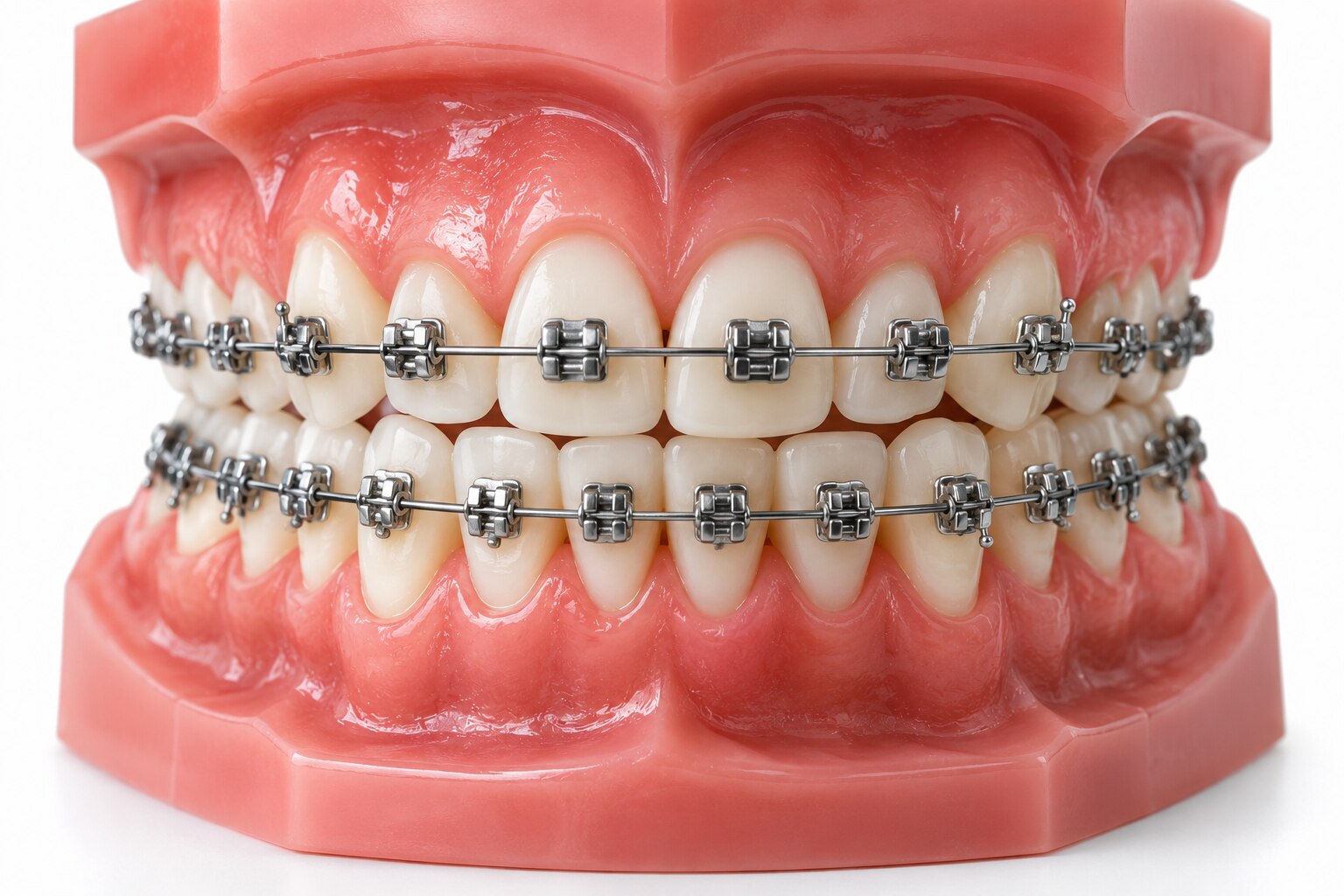
A bracket-and-archwire system applies a small, sustained force to each tooth. As the force acts, the periodontal ligament around the root signals nearby alveolar bone to remodel: bone is removed on one side and rebuilt on the other, creating a path through which the tooth can move.
That is how controlled pressure braces move teeth without pushing them through solid bone.
This process can bring crowded teeth into a usable arrangement by creating or redistributing space. An orthodontist may expand the dental arch, move back teeth, reduce a small amount of enamel between selected teeth, or recommend extraction when the bite, facial profile and available space require it.
Extraction is not an automatic part of braces treatment.
Misaligned teeth can involve several patterns:
- Crowding: teeth overlap or lack enough room.
- Crooked teeth: individual teeth lean, twist or sit out of line.
- Spacing: gaps appear between teeth.
- Overbite: upper front teeth cover the lower front teeth too deeply.
- Underbite: lower teeth sit in front of the upper teeth.
- Crossbite: one or more upper teeth bite inside the lower teeth.
- Open bite: some teeth do not meet when you close your mouth.
Braces mainly reposition teeth. They do not reliably correct a major upper-to-lower jaw mismatch; severe skeletal problems may need growth modification or jaw surgery. Teeth can also shift after treatment, so retainers protect the new positions.
What an orthodontic assessment reveals before treatment
The key question is whether the teeth are in the wrong positions, the jaws meet in the wrong relationship, or both. An orthodontic examination separates these causes before anyone selects braces or aligners.
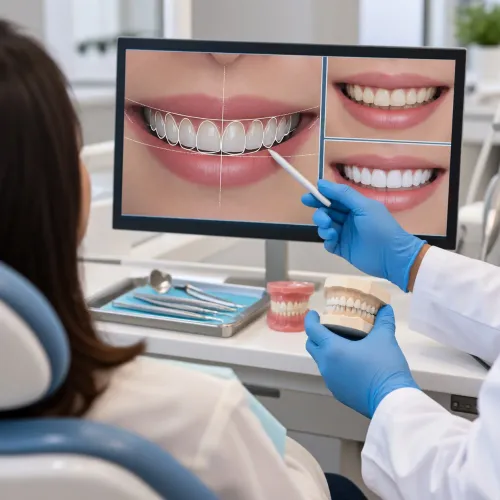
1. The orthodontist records your bite, facial symmetry, speech, chewing pattern and jaw movement. They check crowding, spacing, rotations, overbite, underbite, crossbite, open bite and signs of impacted teeth.
2. Photographs show facial balance and tooth display from the front and side. The clinician compares these views with your bite to identify whether the visible problem is mainly dental or reflects an uneven jaw relationship.
3. Dental scans or impressions create three-dimensional records of each arch. These reveal tooth width, available space, rotation and contact points more precisely than a quick visual check.
4. A panoramic X-ray shows developing or impacted teeth, roots, bone levels and the overall arrangement of both arches. A cephalometric radiograph, taken from the side, measures the position and growth relationship of the upper jaw, lower jaw and teeth.
5. The orthodontist combines these records with your age and growth stage. A growing patient with a developing jaw discrepancy may need growth guidance; a completed-growth patient with a severe skeletal mismatch may need orthodontics combined with jaw surgery. Braces alone primarily reposition teeth.
At Dr. Panjiars Dental Clinic, asking whether the records show a dental problem, a skeletal problem or both helps you understand why a proposed plan may include orthodontics, jaw-surgery assessment or neither.
Related service
Clear and discreet aligners Comfortable and removable design Gradually straightens teeth without metal wires Ideal for both teens and adults View service → |
Choosing between fixed braces, lingual braces and clear aligners
Clear aligners suit mild to moderate crowding, spacing and selected bite corrections when you can wear each tray as prescribed. Fixed appliances offer more dependable control for severe rotations, tooth extrusion, bodily movement, impacted teeth and complex bite coordination.
| Option | Best suited to | Main limitation |
|---|---|---|
| Metal braces | Broad movement control, including severe crowding, rotations, extractions and elastics | Visible brackets; hard or sticky foods can break brackets or bend wires |
| Ceramic braces | The same fixed-brace movements with less visible brackets | Ceramic brackets are more brittle and can cost more; they still require careful cleaning |
| Lingual braces | Fixed, hidden treatment for selected crowding, spacing and bite problems | Access is harder for cleaning, and tongue irritation or speech changes can occur |
| Clear aligners | Mild to moderate crowding, spacing, tipping and selected rotations | Results depend heavily on wearing trays and may need attachments or extra techniques |
Clear aligners are a poor fit when the plan requires large bodily movements, difficult rotations, significant extrusion, impacted-tooth traction or precise control after extractions. They are also a poor choice if you cannot keep trays in for the prescribed time, lose them frequently or struggle with cleaning; missed wear lets teeth drift and extends treatment.
The appliance does not create space by itself. Your orthodontist may combine it with arch development, enamel reduction between selected teeth, movement of back teeth or extraction, based on crowding, bite, facial profile and tooth health. A major upper-to-lower jaw mismatch requires growth treatment or jaw surgery rather than braces alone.
What happens during active orthodontic treatment
After bracket fitting, the orthodontist checks that each bracket and wire is seated correctly. With aligners, you receive a series of trays and instructions for aligner changes. Expect pressure or soreness for several days after fitting, adjustments or a new tray; orthodontic wax can protect cheeks and lips from rubbing.
Scheduled appointments allow the orthodontist to replace or activate wires, review tooth movement and check your gums and appliance. Bring broken brackets, bent wires, lost aligners or persistent pain to the clinic rather than waiting for the next visit.
Treatment commonly lasts about 12 months to 2½ years, depending on movement complexity, extractions, impacted teeth, growth and cooperation.
Your daily responsibilities include:
- Brush with fluoride toothpaste around every bracket, wire, attachment and gumline. Plaque trapped around appliances can cause gingivitis, white or brown marks and cavities.
- Follow instructions for elastics and attachments. Poor elastic wear or a damaged attachment can slow movement and reduce accuracy.
- Wear removable appliances for the prescribed hours and complete aligner changes on schedule. Leaving trays out for long periods can stop progress.
- Avoid hard or sticky foods with fixed braces. Biting into them can loosen brackets or bend wires.
- Keep regular dental check-ups while orthodontic treatment continues.
The orthodontist may use photographs, scans and radiographs during monitoring, including when checking root changes such as external apical root resorption. Active treatment ends when the planned tooth positions and bite are reached, followed by appliance removal or the final aligner stage.
Why oral hygiene, monitoring and retainers determine the result
The final result depends on more than how straight the teeth look at the end. Orthodontic treatment duration commonly ranges from 12 months to 2½ years, with complex movements, extractions, impacted teeth and missed instructions extending the schedule.
Brackets and wires create plaque-trapping areas, so braces cleaning is part of treatment, not an optional cosmetic step. Inadequate cleaning can cause gingivitis, permanent white or brown demineralisation marks and, in severe cases, cavities.
Protect your teeth throughout active treatment:
- Brush twice daily with fluoride toothpaste, carefully cleaning above, below and around each bracket.
- Clean between teeth with floss, an interdental brush or another tool recommended for your appliance.
- Follow dietary restrictions: avoid hard, sticky foods that can loosen brackets or bend wires.
- Keep regular dental check-ups and report swelling, persistent bleeding or a broken appliance promptly.
Monitoring appointments reveal whether teeth are moving safely and whether the bite is developing as planned. A loose bracket, damaged wire or prolonged inflammation can interrupt treatment and compromise cleaning.
Teeth are not permanently locked into place after braces come off. Surrounding bone and tissues reorganise, while growth and everyday forces continue to influence position; relapse can follow if retention is neglected.
Retainers hold the new arrangement while tissues adapt. Wear the removable or fixed retainer exactly as prescribed, then expect long-term or lifelong nighttime retention to protect the result. If a retainer no longer fits, stop forcing it and contact the orthodontist.
Frequently asked questions
How do braces move crowded or crooked teeth?
Brackets and archwires apply controlled force. The periodontal ligament signals alveolar bone to remodel, allowing teeth to move into better positions.
What does an orthodontic assessment check?
It evaluates tooth positions, bite relationships, jaw alignment and the factors that affect treatment planning before braces or aligners begin.
Are clear aligners better than fixed or lingual braces?
Each option has trade-offs. Fixed braces provide continuous control, lingual braces hide appliances behind the teeth, and clear aligners require consistent wear and careful compliance.
Why are retainers needed after orthodontic treatment?
Retainers hold teeth in their new positions while surrounding tissues adapt and help reduce the risk of teeth shifting again.