Replacing several missing teeth involves more than choosing a soft or natural-looking material. You need to understand what supports the appliance, how it compares with fixed and removable alternatives, and which signs show that the fit is working rather than causing damage. By the end, you will be able to judge whether a flexible denture suits your teeth, gums, hygiene routine, and preference for a removable replacement.
Key takeaways
- Compare nylon, PET, and acetal before choosing a flexible denture.
- Check that the denture stays stable without pressure, rubbing, or painful movement.
- Choose implants, bridges, or a rigid denture when stronger support is needed.
- Clean flexible dentures daily and follow professional fitting and adjustment advice.
What a Flexible Denture Contains—and Which Type You Need
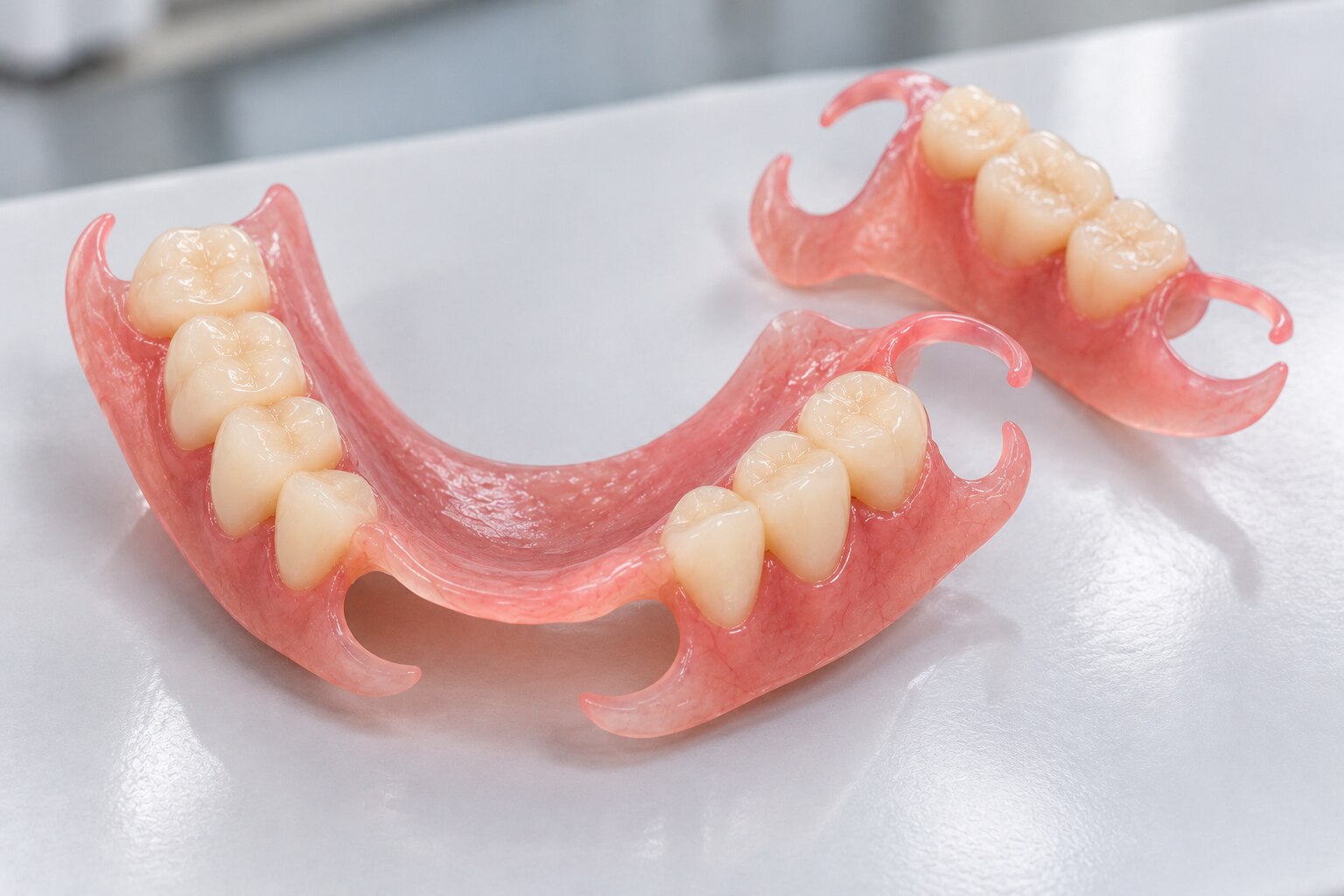
A flexible denture is a removable appliance made from thermoplastic polymers, not a single standard material. Common choices include polyamide (nylon), polyethylene terephthalate, and polyoxymethylene (acetal). The polymer forms the gum-coloured base and tooth-supporting sections; artificial teeth are usually made from resin or acrylic.
Flexible partial dentures may also use polymer clasp arms or gum-coloured extensions that engage natural undercuts around supporting teeth and soft tissue. This can avoid visible metal, but the appliance is not invisible in every mouth and poor design can load a tooth or irritate the gum.
It replaces the visible crown portion of a missing tooth, not its root or the bone lost after extraction.
Choose the appliance type according to how many natural teeth remain:
| Option | What it replaces | When it applies |
|---|---|---|
| Flexible partial denture | One or several missing teeth | Natural teeth remain and can support a removable appliance |
| Complete dentures | All teeth in one arch | No usable natural teeth remain in the upper or lower arch |
| Implant-supported replacement | Missing crowns with fixtures anchored in bone | You need root-like support and are suitable for implant treatment |
A complete denture is therefore not the usual choice when healthy natural teeth remain. Before fabrication, a clinician must assess decay, gum disease, loose supporting teeth, hygiene, and the shape of each undercut; a flexible appliance can make plaque control harder and cannot compensate for untreated disease.
How Flexible Dentures Stay in Place During Daily Use
During speech, flexible denture retention comes from a close-fitting base that contacts the gums and from extensions that engage natural undercuts around the remaining teeth. The material flexes over the widest part of an undercut, then returns to shape beneath it, creating resistance against lifting when your tongue moves or your jaw opens.
Gum-coloured clasps and tooth-coloured extensions can replace visible metal arms near front teeth, but they do not make the appliance invisible in every mouth. Stability also depends on the remaining teeth being firm and healthy; a loose supporting tooth cannot anchor the denture reliably.
Chewing is different from speaking because biting creates downward and sideways forces. A flexible base spreads those forces across the gum and supporting teeth, yet it has less rigid support and indirect retention than a well-designed cast-metal partial denture.
Movement becomes more noticeable across a long space or at the back of the mouth, where the base can press into the tissue during chewing.
That flexibility brings comfort during insertion and reduces hard edges, but it can make removal harder when the undercuts are deep. Poorly controlled retention can pull on an abutment tooth or irritate the gum, while close tissue contact can trap plaque and make cleaning more difficult.
Have active decay, gum disease, unstable teeth, and troublesome undercuts addressed before fabrication; comfort cannot compensate for weak support.
When Flexible Dentures Make Sense—and When Another Option Is Better
Choose a flexible denture when you need a removable replacement without visible metal clasps, especially for a short gap or front-tooth space. Gum-coloured extensions can look discreet, but the appliance still replaces crowns, not roots; bone loss after extraction continues.
Long spans and back-end gaps require careful design because a flexible base can sink toward the tissue during chewing.
| Option | Main advantage | Main limitation |
|---|---|---|
| Flexible denture | Discreet appearance and easy addition of replacement teeth | Less rigid support; insertion, removal, and cleaning can be difficult |
| Acrylic partial dentures | Lower-cost, easily adjustable removable option | Bulkier base; can cover more palate or gum and fracture more readily |
| Metal-framework partial dentures | Strong support, efficient chewing, and better indirect retention | Metal components can show; requires adequate supporting teeth |
| Fixed bridges | Non-removable teeth with stable chewing function | Requires reshaping supporting teeth; unsuitable when abutments are weak or the gap is too long |
| Dental implants | Replaces tooth roots and helps preserve function in the treated area | Requires surgery, healing time, sufficient bone, and higher treatment commitment |
Ask about another option when:
- You have a long-span or distal-extension gap and need firm chewing support; a metal-framework partial denture or dental implants may control movement better.
- You want a permanent-feeling replacement and have healthy supporting teeth; fixed bridges or dental implants may fit that goal.
- Decay, gum disease, loose teeth, poor cleaning, or unfavourable undercuts remain untreated. Stabilise those problems before choosing any removable appliance.
The Fitting Process and the Signs of a Correct Fit
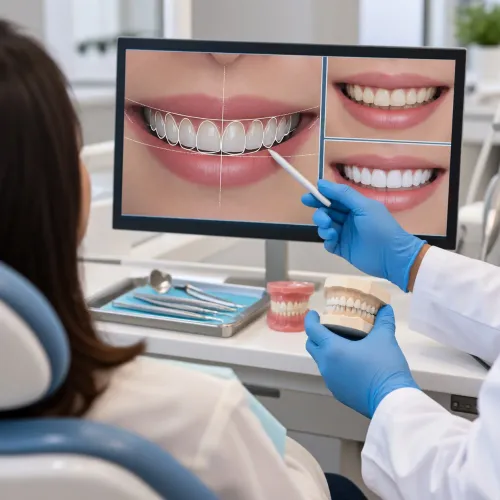
Before fabrication, a dental examination checks the teeth and tissues that will support the appliance. Active decay, loose teeth, gum disease, poor plaque control, and deep undercuts need treatment or a design decision first; a denture can trap plaque and overload weak teeth.
The denture fitting process usually includes:
- Recording your bite and the shape of the missing-tooth area with dental impressions or digital scans. Tell the clinician about any suspected reaction to dental materials, since pigments, processing residues, and polymers such as nylon or acetal can all matter.
- Planning the base, artificial teeth, gum-coloured extensions, and clasp positions around your supporting teeth. Long gaps and back-tooth spaces need careful support because a flexible base can sink toward the gum during chewing.
- Checking the appliance at delivery. It should seat fully without rocking, lift when you speak, or press sharply against one tooth or gum area.
At Dr. Panjiars Dental Clinic, ask which polymer was used and which tooth or tissue provides support; those details help explain later pressure spots or movement.
For the first several uses, test soft foods and speak aloud. A correct fit stays stable while you open, close, and move your tongue, and it should not cause clicking, persistent lisping, cheek biting, or food trapping. Remove it and report a sore spot, bleeding, numbness, or pain that lasts beyond a short settling period.
Do not file or bend it yourself.
Related service
Replace missing teeth for a natural look Provide comfortable fit and easy wear Flexible options for enhanced comfort and durability Restore confident... View service → |
Care, Adaptation, and the Limits of Flexible Materials
Effective flexible denture cleaning is the foundation of denture hygiene. Remove the appliance for cleaning and at night unless your dentist gives different instructions. Rinse it after meals, brush it gently with a soft denture brush and mild liquid soap, and rinse away every residue.
Hot water can distort thermoplastic material, while abrasive toothpaste, bleach and household cleaners can roughen the surface, allowing more plaque and staining to stick.
Check the appliance and your mouth each day for:
- Red patches, cuts or pressure sores that remain after removing the denture
- A new crack, sharp edge, looseness or clicking sound
- Persistent odour, staining or food trapped beneath the base
- Difficulty speaking, chewing or closing your teeth comfortably
Speech, saliva flow and chewing often feel different during the first days. Increase wearing time gradually, chew small pieces on both sides, and do not file, bend or reline the appliance yourself. Persistent soreness is not a normal adaptation challenge: arrange a professional denture adjustment before a small pressure spot becomes an ulcer.
Flexibility does not guarantee comfort. Border length, bite contact, clasp position, supporting teeth and gum condition determine how pressure is distributed. The polymer, pigment or processing residue can also trigger a reaction; metal-free does not mean allergy-proof. Tell your dentist about any suspected dental-material allergy and request the material history before replacement.
Frequently asked questions
What materials are used in flexible dentures?
Flexible dentures commonly use polyamide nylon, polyethylene terephthalate, or polyoxymethylene acetal for the base and tooth-supporting sections. The artificial teeth are usually resin or acrylic.
How do flexible dentures stay in place?
The base extends around selected natural teeth and gum areas, using the material’s shape and flexibility for retention. A dental professional must design the appliance for stable contact and a balanced bite.
When is a flexible denture a suitable choice?
It can suit people replacing selected missing teeth who want a removable, gum-coloured appliance without visible metal clasps. It is less suitable when you need maximum chewing strength, extensive tooth replacement, or a fixed solution.
How can you tell whether a flexible denture fits correctly?
A correct fit stays secure during speaking and chewing, does not cause persistent soreness, and does not rock or create pressure points. Contact your dentist if rubbing, looseness, bite changes, or gum irritation continues.