A smile preview is useful only when it reflects your face, lip movement, bite, gum health and treatment limits—not just an attractive set of digital teeth. By understanding the records, review stages and clinical checks involved, you can judge whether a proposed design is a realistic plan or merely a polished image.
Key takeaways
- Request facial, dental and bite records before approving treatment.
- Review tooth proportions, gum display, smile arc and facial midline together.
- Test the proposed shape with a temporary mock-up before final treatment.
- Confirm how digital planning coordinates veneers, orthodontics, implants or gum treatment.
What a Digital Smile Design Includes Before Any Treatment
A personalized Digital Smile Design starts with records that show your face, teeth, lips and bite in motion, not just a close-up of individual teeth. The dentist uses these records to compare tooth proportions, facial midline, incisal edge position, smile arc and gum display.
1. Front and profile photographs capture facial symmetry, lip position and how the proposed teeth relate to your features. The set also includes retracted tooth photographs, with the lips pulled aside, to show tooth surfaces, gum levels, existing restorations and alignment clearly.
2. A smile video records smiling, speaking and relaxed facial movement. It helps reveal tooth visibility at rest, lip support, speech-related changes and whether the design still looks natural as your expression changes.
3. An intraoral scan or conventional impression records tooth shape, spacing and the dental arches in three dimensions. The dentist assesses tooth width, length, contour, shade and the relationship between the upper and lower teeth.
4. Radiographs and a bite assessment check roots, bone, decay, existing treatment, jaw relationships and contact points. These findings set biological and functional limits that a photograph cannot show.
The records are combined with reference lines and measurements to create a proposed digital wax-up or virtual mock-up. This visual plan supports discussion of conservative and more extensive options, but it does not replace diagnosis, risk assessment or informed consent.
A design that looks attractive on screen still needs clinical testing for cleansability, speech, comfort and function.
How Your Records Become a Digital Mock-Up
The records become a reviewable mock-up by aligning your face, teeth and bite in one digital workspace. Your dentist combines photographs, an intraoral scan, digital impressions, facial measurements and relevant radiographs to create a three-dimensional reference model.
1. Your consultation defines the change you want and records practical limits such as tooth wear, gum health, lip movement, speech and bite. Front, profile and retracted-tooth photographs show how your smile relates to your face.
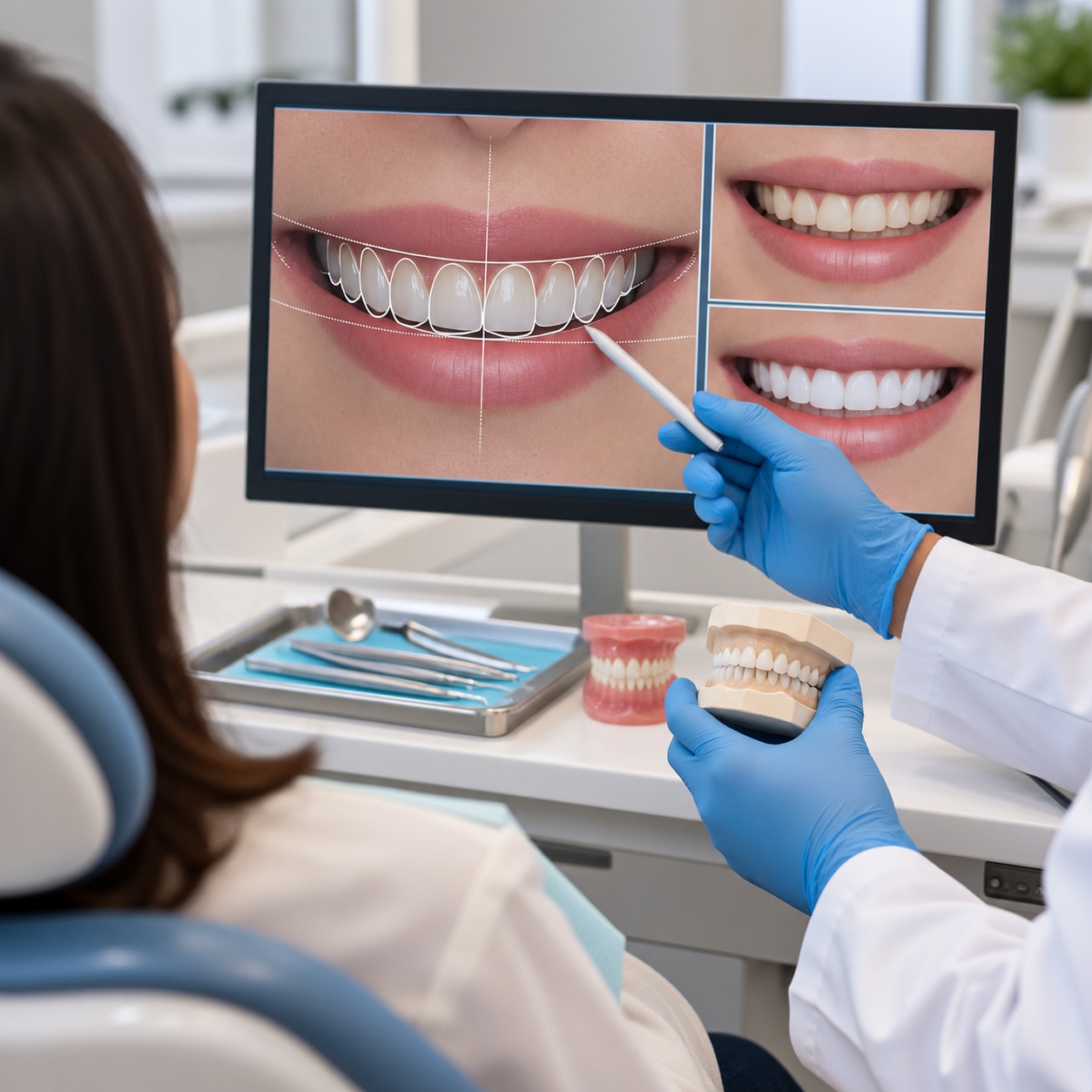
2. The software maps landmarks including the facial midline, eye line, lip line and incisal plane. It then compares tooth width, length, shape, gingival display and smile arc against those landmarks rather than judging each tooth alone.
3. The dentist creates a digital wax-up by adjusting tooth contours, proportions and gum edges. You can compare alternatives, such as longer versus shorter incisors or a broader versus narrower smile, before any enamel is prepared.
4. The proposed design is shown as a digital mock-up over photographs or a scanned face and mouth. Ask how the alignment was checked, because head position, expression, saliva, movement and scan stitching can distort the result.
The screen image is a proposal, not a guarantee. A physical mock-up transferred into your mouth provides the next check: lip support, speech, tooth visibility at rest, bite contacts and cleaning access can reveal changes worth making before treatment begins.
What the Design Evaluates Beyond Individual Teeth
A design can look balanced on isolated teeth yet appear wrong on your face. The assessment therefore aligns the proposed smile with facial midline, eye and lip levels, facial symmetry, and the direction of the incisal plane. Tooth proportions and incisal edge position are judged against these landmarks, not against the dental midline alone.
| Feature | What is evaluated | Why it matters |
|---|---|---|
| Facial | Facial midline, symmetry, lip fullness, profile, and head position | A smile that follows the teeth but conflicts with the eyes or lips can look tilted or displaced |
| Dental | Tooth proportions, width-to-length ratios, shape, shade, incisal edge position, and smile arc | These relationships determine whether the teeth look coherent rather than oversized, narrow, or uneven |
| Functional | Tooth visibility at rest, lip support, speech sounds, smile movement, bite contacts, and jaw movement | A beautiful static image fails if it affects pronunciation, comfort, chewing, or natural lip movement |
| Biological | Gum display, gum levels, periodontal condition, enamel thickness, cleansability, and available tooth structure | Over-contoured restorations, deep margins, or excessive reduction can create plaque retention, inflammation, sensitivity, or weakened teeth |
Gum display must be assessed during a natural smile, not only in a posed photograph. Video and an intraoral mock-up show how the design behaves while you speak and move, including whether the smile arc remains attractive and the lips receive adequate support.
The dentist must also verify margins, bite, speech, and hygiene access clinically because a digital overlay is not an exact prediction of the final result.
How to Review the Preview and Test It in Your Mouth
Do not approve a smile from a screen image alone. A digital wax-up is a proposal for discussion, not a guarantee that the final restorations will match the image exactly. Ask to see an intraoral mock-up made from that plan before enamel preparation or surgery.
1. Ask which options you are comparing: conservative versus extensive treatment, different tooth shapes, widths, lengths, shades and gingival contours. Confirm what each option requires, what remains reversible, and how maintenance, risks and likely longevity differ.
2. Wear the mock-up while your face moves naturally. Check lip support, tooth visibility at rest, speech and smile display in a mirror and on video. Read aloud, count, smile broadly and speak normally; bulky edges or altered tooth length can affect sounds and confidence.
3. Test function, not just appearance. Ask the dentist to check occlusal contacts and interference as you bite, chew and move your jaw. Run your tongue along the contours and try flossing around every proposed margin; a beautiful shape that traps plaque is a poor design.
4. Request revisions while the mock-up is still in place. Compare the alternatives side by side, then photograph your face at rest, in a natural smile and during speech.
At Dr. Panjiars Dental Clinic, use this stage to record the agreed design and ask whether gum health, orthodontic movement or surgery must come first. Approval of the preview is not informed consent: diagnosis, alternatives and treatment limitations still require a separate discussion.
Related service
Laminates – Enhance tooth appearance with minimal preparation Veneers – Correct chipped, stained, or misaligned teeth Digital Smile Designing –... View service → |
How Digital Planning Coordinates the Treatment That Follows
A digital smile design turns proposed proportions into a treatment sequencing plan, not a promise of an identical final image. It shows whether veneers and laminates alone would force overly wide, long, or poorly supported teeth, prompting space redistribution, gum reshaping, or implant-site development instead.
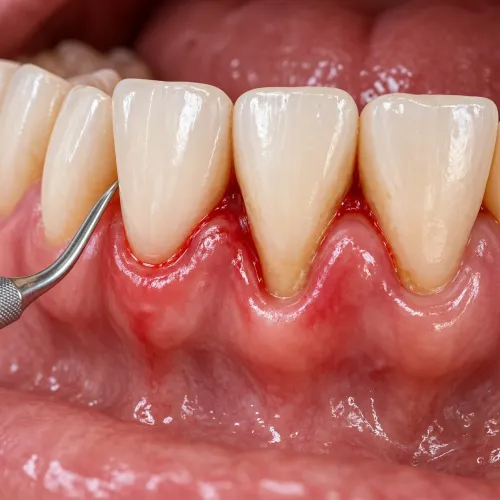
1. Control disease first. Periodontal treatment, caries care, crack assessment, pulpal testing, and bite evaluation establish whether the foundation can support cosmetic work. A healthy-looking simulation cannot make inflamed gums or an unrestorable tooth suitable for treatment.
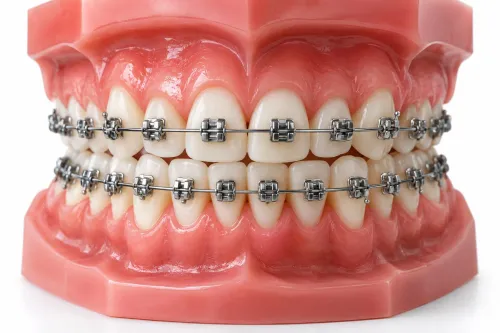
2. Create space and alignment with orthodontics when tooth positions or proportions require it. Moving teeth before restoration can reduce excessive drilling and produce more balanced midline, incisal-edge, and smile-arc relationships.
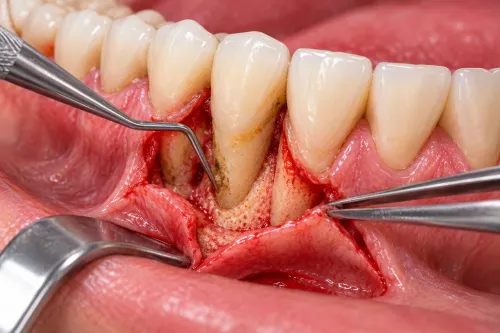
3. Complete surgical and gum changes before final scans and restorative margins. Crown lengthening, soft-tissue management, or implant-site development changes the framework that the final teeth must fit.
4. Whiten natural teeth before selecting definitive restorative shade. This prevents veneers, laminates, or implant crowns from being matched to a colour you later change.
5. Finish with restorative treatment after the tissues have healed and the tooth positions are stable. The plan can guide preparation limits, tooth contours, and implant restoration design.
The digital wax-up helps compare alternative widths, lengths, shapes, and gingival contours during this process. Verify each decision with clinical examination, radiographs, periodontal measurements, bite checks, and trial restorations: head position, expression, scanning, and registration errors can distort the screen image. The result is a tested direction, not a guaranteed replica.
Frequently asked questions
What does a Digital Smile Design include before treatment?
It includes photographs and scans of your face, teeth, lips and bite, including records taken during movement and smiling.
How are records turned into a digital mock-up?
The dentist combines facial photographs, dental scans and bite information to map tooth proportions, position and appearance in a digital preview.
What does digital smile planning evaluate beyond individual teeth?
It evaluates the facial midline, incisal edge position, smile arc, gum display, lip movement, tooth proportions and how the teeth fit the bite.
How can you review and test a smile preview?
Review the preview with your dentist, ask how it changes your smile in motion, and test the proposed shape with a temporary mock-up when available.
How does digital planning coordinate treatment afterward?
It gives the dental team a shared plan for sequencing treatments such as orthodontics, gum care, veneers, crowns, implants or tooth replacement.