A loose full denture can affect speaking, chewing and confidence, but a fixed implant bridge is not the only alternative. By comparing removable overdentures with conventional and fixed options, you can judge candidacy, understand the treatment stages, anticipate maintenance and ask more useful questions about your own plan.
Key takeaways
- Implant overdentures improve retention while remaining removable for cleaning.
- Two implants can support some lower overdentures; bone and health determine suitability.
- Fixed bridges offer less removable movement but require more implants and hygiene access.
- Plan for relining, attachment replacement and regular professional maintenance.
What an implant overdenture is and how it stays in place
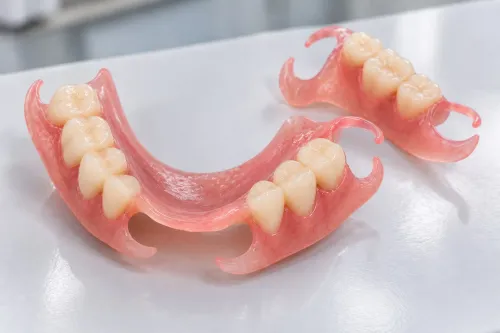
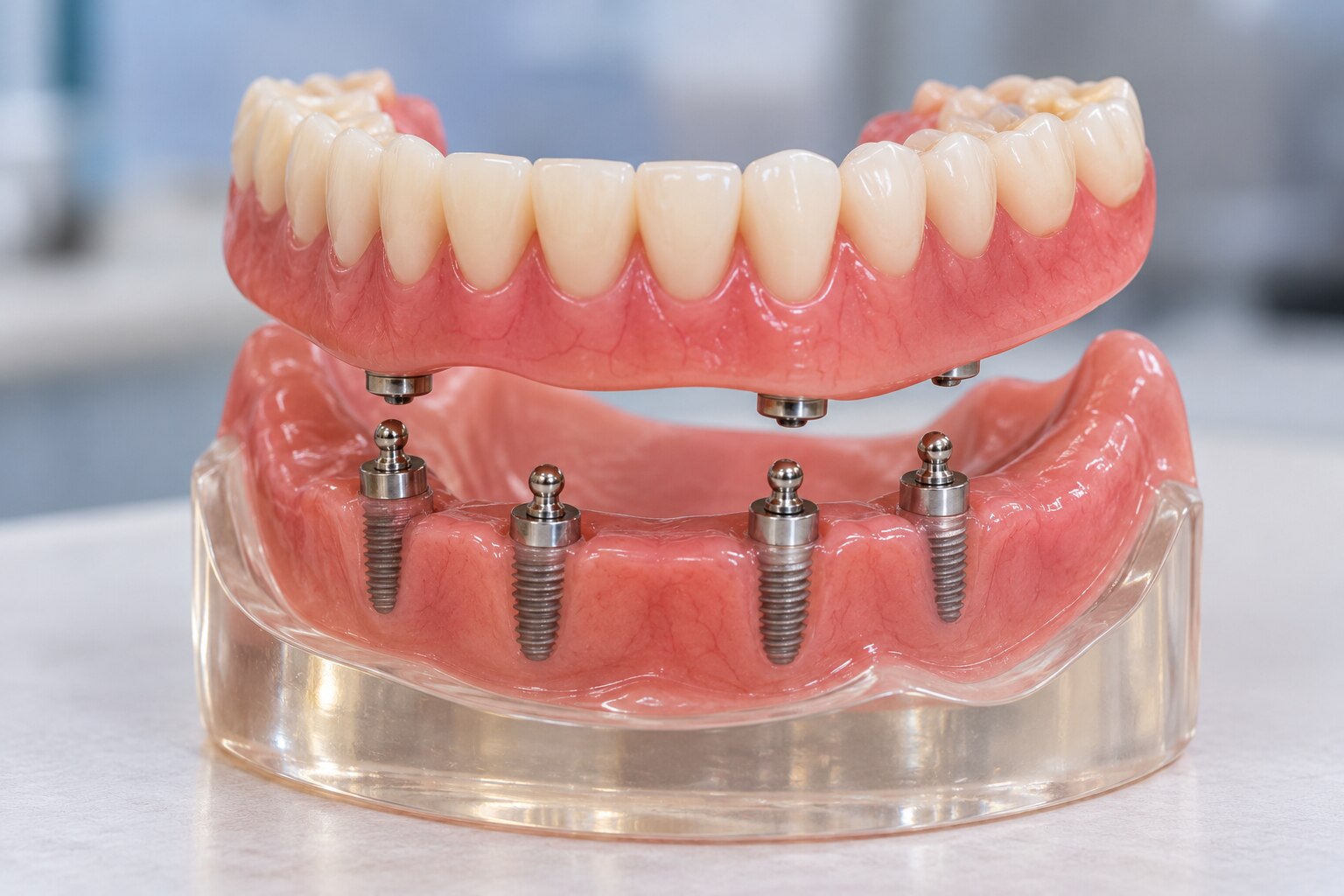
The implant overdenture definition is a removable denture that connects to dental implants through abutments, such as locator attachments or connectors. Unlike a conventional full denture, it gains retention from the implants; unlike a fixed implant bridge, you remove it yourself.
To use it, align the denture with the abutments and press it into place until the retention parts engage. It should feel more secure during speaking and chewing, but it is not immovable: the base can still rock slightly, and pressure from an uneven bite or a changing gum ridge can create a sore spot.
Remove it as instructed, rather than pulling it sideways and stressing the attachments.
Clean the denture separately and brush around each implant and attachment every day. Food and plaque can collect beneath the base even when the denture feels stable. Retention inserts are wear items, so reduced grip often needs an insert replacement or adjustment, not new implants.
The overdenture may also need a reline, bite adjustment, repair or replacement teeth as the ridge, denture base or teeth change. Regular reviews protect comfort and function.
Conventional denture, overdenture or fixed bridge: which design fits the decision?
The deciding difference is who can remove the appliance and how much movement remains. A conventional full denture rests on the gums and jaw ridge, so it can lift, rock or create sore spots during chewing and speaking. An implant-retained overdenture clips onto implant attachments, improving retention while remaining removable by you.
| Option | Stability and feel | Removability and cleaning access | Treatment considerations |
|---|---|---|---|
| Conventional full denture | Rests on the gums; movement is common, especially in a lower jaw | Remove it yourself; clean the denture and gums separately | No implant surgery, but fit can change as the ridge resorbs |
| Implant-retained overdenture | Attachments resist lifting and sideways movement; they do not eliminate every sore spot or denture movement | Remove it yourself; clean beneath the denture and around each implant daily | In a completely edentulous lower jaw, two implants are widely used as a predictable minimum design |
| Fixed implant-supported bridge | Feels more like a continuous row of teeth and stays in place during use | You cannot remove it; clean underneath with floss threaders, interdental brushes or a water flosser | Requires more implants, restorative space and precise planning, with professional removal for full access |
Choose the overdenture when you want stronger retention without giving up home removal. Choose a fixed implant-supported bridge when maximum fixed stability outweighs more complex cleaning, treatment and maintenance. An overdenture still needs relines, attachment-part replacement and denture repairs as tissues and components change.
How implant numbers, bone and health shape eligibility
A two-implant mandibular overdenture is widely regarded as a predictable minimum option for a completely edentulous lower jaw, not merely a fallback when a fixed bridge is impossible. It can improve retention over a conventional denture, but it will not deliver the chewing efficiency of natural teeth.
The upper jaw needs separate planning. Maxillary overdenture implants commonly require more implants than the familiar lower-jaw design, often joined by a bar, because upper-jaw bone is less dense and loading is different. Your plan depends on:
- Bone volume and the location of the mandibular nerve or maxillary sinus
- Bite force, clenching habits and the amount of restorative space
- Implant angulation, lip support and how much gum shows when you smile
- Gum health and diabetes control
- Your ability to remove, clean and maintain the denture and attachment areas
Insufficient bone volume does not automatically rule out treatment, but it may require grafting, altered implant positioning or another prosthetic design. Uncontrolled diabetes raises healing and complication risks; medical review and improved control provide a better basis for a decision than a simple yes-or-no rule.
Your goal also matters. An overdenture suits someone prioritising removable cleaning and improved stability, while severe bite forces, limited hygiene access or a demand for fixed teeth may favour another design. Immediate connection is reserved for implants with strong initial stability and controlled loading, not used as a universal shortcut.
From assessment to fitting: the treatment stages and likely trade-offs
Expect a dental examination and bite evaluation, gum assessment, medical history review, and checks of denture space and cleaning ability. Radiographs and 3D imaging show bone volume, nerve position, sinus anatomy and sites needing treatment.
The usual stages are:
- Plan implant positions and the attachment design; discuss whether the lower jaw needs two implants or the upper jaw needs more, often joined by a bar.
- Complete bone grafting and extractions if infection, unstable teeth or insufficient bone would compromise placement.
- Place the implants, then allow osseointegration—the bonding of bone to the implant—before connecting the denture, unless immediate loading is safe because primary stability and bite control are adequate.
- Fit, adjust and review the denture, attachments and bite; schedule maintenance for relining, worn retention inserts and hygiene checks.
| Decision | Main trade-off | Cost or risk driver |
|---|---|---|
| Two-implant lower overdenture | Predictable retention with removable cleaning, but not natural-tooth chewing power | Implant surgery, attachments and later insert replacement |
| More implants or splinting in the upper jaw | Better load distribution in less dense bone, with greater surgical and cleaning complexity | Implant count, bar or framework design, bone grafting and laboratory work |
| Immediate connection | Fewer healing visits, but failure risk rises if stability or occlusal control is poor | Case selection and close follow-up |
Uncontrolled diabetes, smoking, gum disease and poor hygiene increase healing and inflammation risks. Compare the initial fee with maintenance, repairs and possible relining; Dr. Panjiars Dental Clinic can help itemise those stages before consent.
Related services
Replace missing teeth for a natural look Provide comfortable fit and easy wear Flexible options for enhanced comfort and durability Restore confident... View service → |
Permanent solution for missing teeth Natural look and feel Restores full chewing function Long-lasting and durable option View service → |
Daily cleaning, comfort adjustments and long-term maintenance
Remove the overdenture after eating, rinse it under cool water, and clean it twice daily with a soft brush and non-abrasive liquid soap. Toothpaste can scratch the acrylic surface and leave places for plaque to collect.
Daily implant and attachment cleaning matters as much as cleaning the denture. Use a small soft toothbrush or interdental brush around each abutment and beneath accessible attachment areas. For denture soaking, use a cleanser approved for the denture material and follow its time limit; never use boiling water, bleach, or household disinfectant.
- Remove the appliance before brushing the implants and attachments.
- Rinse the denture after meals and brush all surfaces.
- Store it in water or the recommended solution when it is out of your mouth.
- Keep the denture out overnight unless your clinician gives different instructions.
Pressure points need adjustment, not endurance. A persistent sore spot, rocking base, or sharp edge means the denture needs examination; do not grind it yourself. Speech adaptation improves with short reading-aloud sessions, but worsening clicks or difficulty chewing signals a fit problem.
Call promptly for sudden looseness, a detached housing, a cracked base, bleeding, swelling, or pain. Do not glue a broken component. Keep every fragment and bring it to the appointment.
Plan regular reviews for attachment replacement and relining, occlusal adjustment, repairs, and worn denture teeth. The implants can remain stable while the ridge and soft tissues change, so maintenance protects comfort and function over time.
Frequently asked questions
What is an implant overdenture?
It is a removable denture that connects to dental implants through abutments such as locator attachments. You remove it yourself, unlike a fixed implant bridge.
How does an implant overdenture compare with a conventional denture or fixed bridge?
A conventional denture relies on gum and jawbone support, an overdenture gains retention from implants, and a fixed bridge stays attached to implants. The right design depends on stability needs, bone, health, cleaning ability and treatment goals.
How many implants are needed for an overdenture?
The number depends on the jaw, available bone, denture design and treatment plan. Some lower overdentures use two implants, while other designs require more.
What does implant overdenture treatment involve?
Treatment includes examination and imaging, health and bone assessment, implant placement when suitable, healing, attachment connection, denture fitting and adjustment. Ongoing cleaning, relining and attachment maintenance are part of care.
Related service
Laminates – Enhance tooth appearance with minimal preparation Veneers – Correct chipped, stained, or misaligned teeth Digital Smile Designing –... View service → |