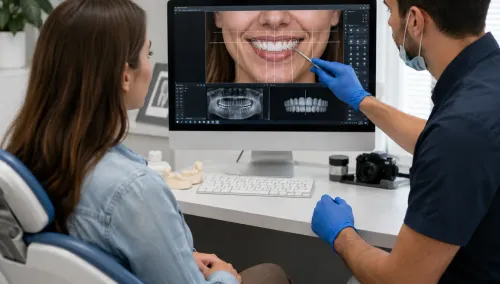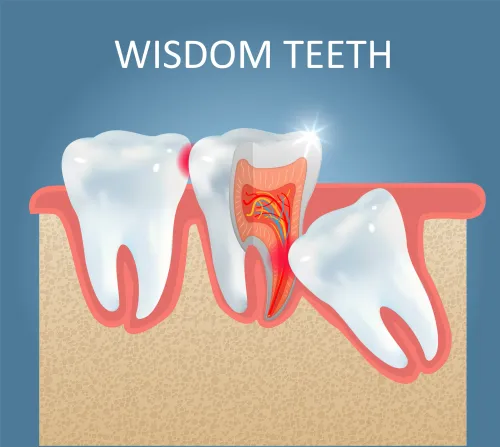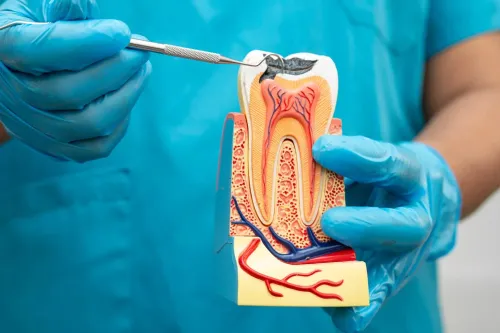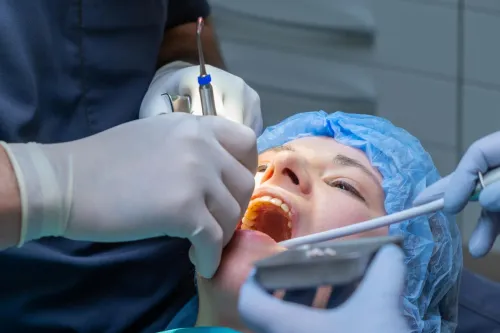
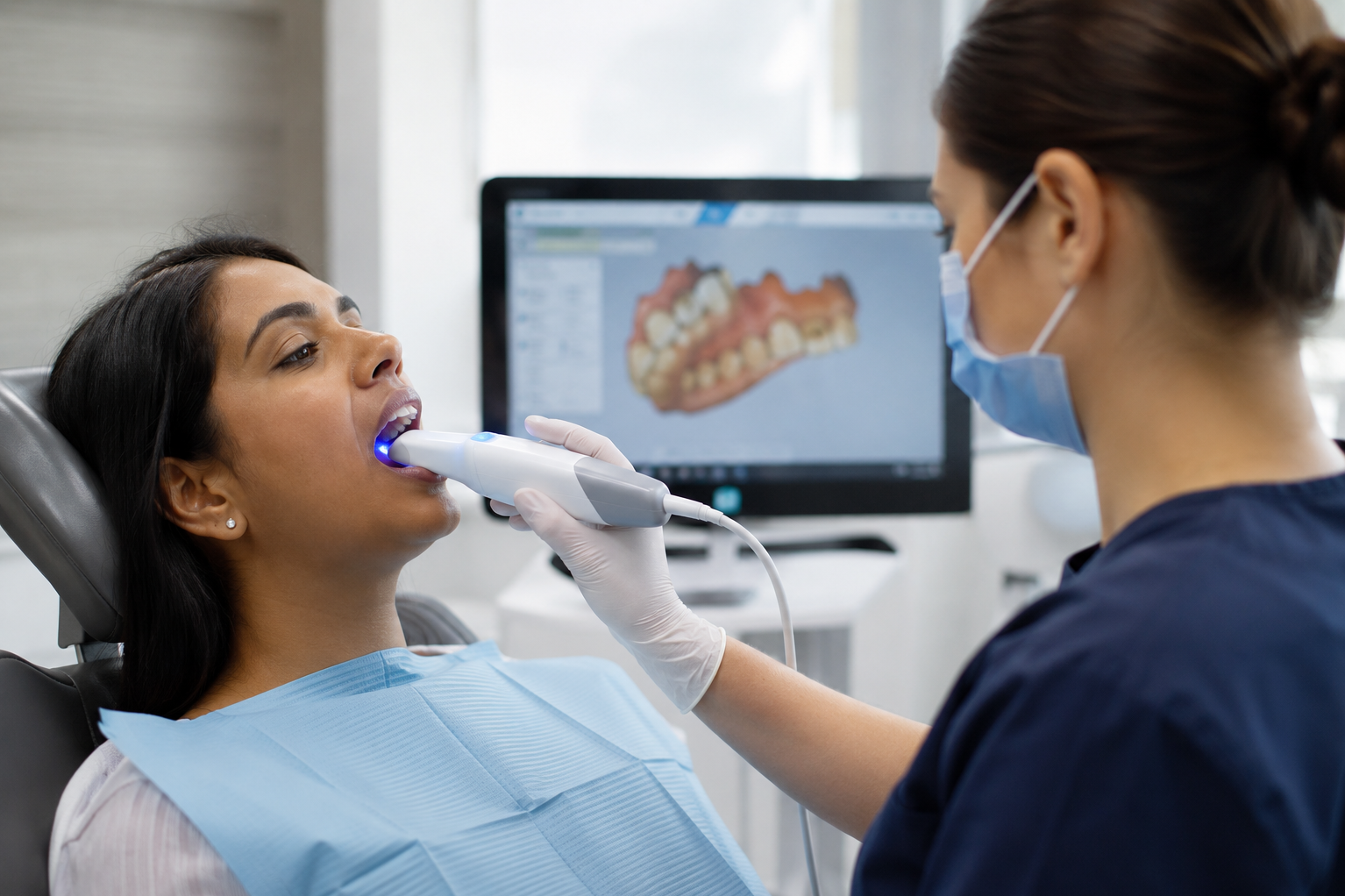
A dental crown may be recommended when a tooth has lost substantial structure because of decay, fracture, large fillings, wear, or previous root canal treatment. With scanned advanced crowns, digital impressions can form part of the restorative workflow, replacing or reducing reliance on conventional impression techniques in suitable cases.
For patients in Gondhale Nagar, Pune, Maharashtra, understanding what digital scanning actually contributes can make it easier to evaluate crown treatment based on clinical value rather than technology alone.
How Digital Scanning Works
An intraoral scanner captures detailed images of the teeth and surrounding structures. Software uses this information to create a three-dimensional digital model.
The digital record can then assist in designing the planned restoration and communicating information with the dental laboratory or manufacturing system.
Compared with traditional impression materials, scanning can be more comfortable for patients who have a strong gag reflex. It can also allow the dentist to inspect captured areas immediately and rescan selected sections when required.
What Makes a Good Crown
Digital technology alone does not determine whether a crown will be successful.
A well-planned crown depends on several factors, including:
- Accurate diagnosis
- Healthy supporting gums
- Appropriate tooth preparation
- Adequate remaining tooth structure
- Suitable crown material
- Accurate margins
- Correct bite
- Proper cementation
- Effective home care
Material selection also matters. Different restorative materials have different aesthetic, strength, thickness, and clinical requirements.
Digital Impressions Compared With Conventional Impressions
Conventional impressions remain clinically useful and may still be preferred in certain situations. Digital scanning provides another method of recording oral structures rather than making traditional techniques obsolete in every case.
The better approach depends on the location of the tooth, margin visibility, moisture control, restoration type, and clinical situation.
Patients should therefore avoid choosing a crown purely because it is described as digital or advanced.
What Patients Should Evaluate
Before proceeding, ask why the crown is required and whether another restoration could preserve more natural tooth structure.
It is also useful to understand which material is being proposed and why. A crown for a highly visible front tooth may have different aesthetic priorities from a crown used on a heavily loaded back tooth.
Patients who grind their teeth may require additional consideration because repeated excessive forces can affect both natural teeth and restorations.
Long-Term Care Still Counts
A crowned tooth still requires brushing, interdental cleaning, and dental reviews. Decay can develop around restoration margins, and gum disease can affect the supporting tissues.
At Dr. Panjiar's Multispeciality Dental Centre, restorative planning can combine digital scanning with clinical assessment when scanned crowns are appropriate.
For people in Gondhale Nagar and surrounding Pune areas, the strongest reason to consider a digitally planned crown is not the technology by itself. It is the ability to combine accurate records, suitable restorative materials, careful bite assessment, and sound clinical planning to rebuild a damaged tooth in a functional and maintainable way.
Keywords