A badly damaged tooth and a gap from a missing tooth create different structural problems, so they do not automatically call for the same restoration. By the end, you will know what crowns and bridges repair, which findings make them unsuitable, how they compare with implants and dentures, and what the treatment process requires.
Key takeaways
- Use a crown to reinforce one damaged tooth.
- Use a bridge to replace missing teeth across a gap.
- Check decay, gum disease and supporting teeth before treatment.
- Report looseness, pain, poor fit or bite changes after fitting.
Crown or bridge: which problem does each one solve?
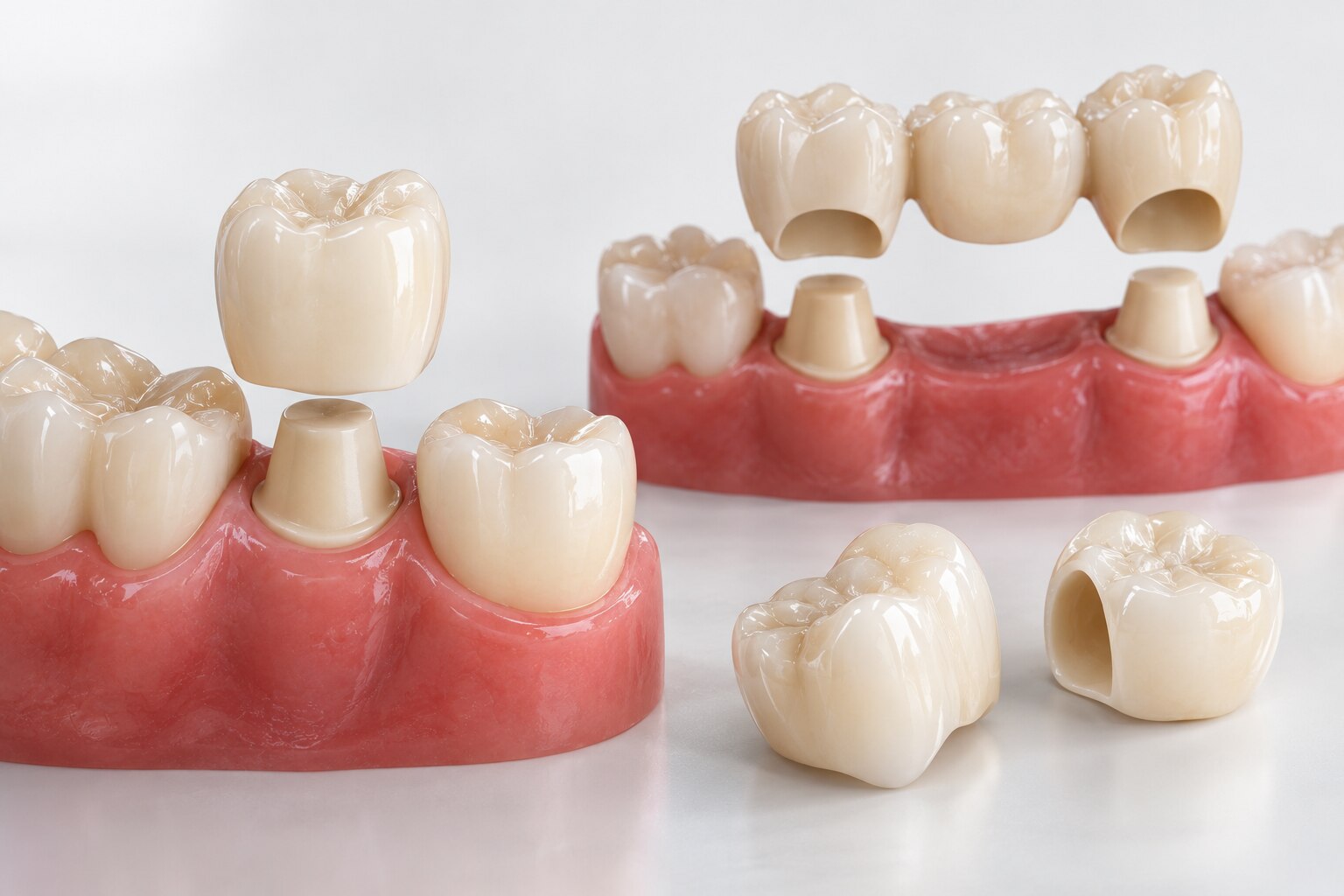
A crown repairs and reinforces one damaged tooth; a bridge fills a gap left by one or more missing teeth. A dental crown, also called a cap, covers a prepared tooth or an implant abutment. It suits a tooth weakened by a large filling, extensive decay, a crack, heavy wear or an unusual shape.
A selected root-canal-treated tooth also needs a crown when little sound structure remains or biting forces are high. Search terms such as “large filling tooth crown” and “root canal crown” describe this protective use.
| Option | What it means | When it applies |
|---|---|---|
| Crown | Covers one prepared tooth or implant abutment | The tooth remains but needs reinforcement |
| Conventional dental bridge | A pontic joins crowns placed over prepared neighbouring teeth | One missing tooth or a short gap between stable teeth |
| Maryland bridge | A pontic uses metal or ceramic wings bonded behind an adjacent tooth | A suitable front-tooth gap with enough bonding surface |
| Cantilever bridge | A pontic is supported from one side only | A carefully selected gap where one-sided support is safe |
The key question in crown versus bridge is whether the tooth remains restorable or the gap needs replacement. A bridge transfers chewing forces to neighbouring teeth or implants, so those supports need sound roots, bone and gums. A crown is the wrong choice for an unrestorable tooth, untreated infection, inadequate ferrule or severe periodontal mobility.
Both conventional bridge preparation and crown preparation permanently remove tooth structure; an implant-supported option avoids cutting neighbouring teeth but requires surgery and suitable bone and health.
What must be healthy enough to support a crown or bridge?
A crown is suitable only when enough tooth, root and surrounding bone remain to carry chewing forces. A tooth structure assessment checks cracks, decay, old fillings, root condition and the ferrule effect: a continuous band of sound tooth above the gum that helps resist splitting.
Untreated infection, an unrestorable tooth or inadequate ferrule makes a crown the wrong choice.
For a bridge, the bridge abutment teeth must have sound structure, healthy roots, stable bone and limited mobility. The dentist also checks bite forces, the width of the gap, spacing, adjacent-tooth health and whether you can clean beneath the pontic and around the margins.
Uncontrolled gum disease and bridge planning do not mix; a long span, weak or heavily restored supports, insufficient space or poor cleaning access can make the design unsuitable.
Findings that can change the plan include:
- Severe periodontal mobility or active gum infection
- A root fracture, untreated abscess or decay extending below repair
- Heavy clenching or grinding that overloads a weak support
- Crowding or spacing that prevents a stable path of insertion
- A gap too long for the available bridge abutment teeth
Dr. Panjiars Dental Clinic can combine examination findings with X-rays or scans to judge crown suitability, bone support and cleansability before treatment, rather than selecting a restoration for appearance alone.
| Option | Foundation required | Warning sign |
|---|---|---|
| Crown | One repairable tooth with ferrule and stable root | Infection, fracture or severe mobility |
| Conventional bridge | Two sound, cleanable supporting teeth | Weak abutments, long span or uncontrolled gum disease |
Related service
Restores function, aesthetics, and bite alignment Combines crowns, bridges, and implants for complete care Personalized treatment for complex dental... View service → |
How crowns and bridges compare with implants, dentures and leaving a gap
A conventional bridge is fixed and avoids implant surgery, but tooth preparation for bridge abutments permanently removes healthy enamel and dentine. You must also clean beneath the pontic, because brushing alone cannot reach every surface and food can collect around the connectors.
An implant-supported crown or bridge avoids cutting adjacent teeth. The trade-off is implant surgery and bone: you need suitable bone volume, healthy gums, enough healing time for integration and general health that supports surgery.
| Option | Main advantage | Main trade-off |
|---|---|---|
| Conventional bridge | Fixed stability and no implant surgery | Irreversible preparation of neighbouring teeth; cleaning beneath the pontic is essential |
| Implant-supported crown or bridge | Replaces the tooth without cutting adjacent teeth | Requires surgery, adequate bone and gums, healing or integration, and suitable general health |
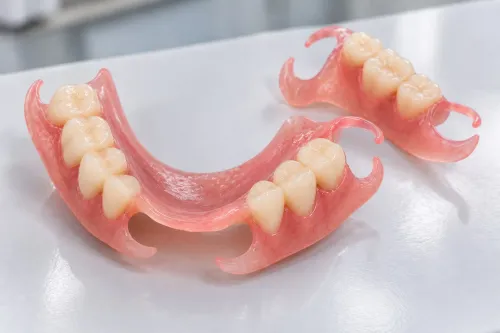
| Partial denture | Removable replacement that does not require the same abutment-tooth preparation | Can move during use and needs removal, regular cleaning and adjustment |
The bridge versus implant decision depends on the condition of neighbouring teeth, bone, gums, cleaning access and your tolerance for surgery. A bridge versus partial denture decision weighs fixed comfort against irreversible preparation and the daily care required for a removable appliance.
Leaving a missing tooth gap does not automatically mean you need immediate replacement. The gap can shift chewing forces, allow nearby or opposing teeth to move and leave you struggling with certain foods; monitoring can be reasonable when function, appearance and tooth stability remain acceptable.
What happens from examination to final fitting?
The crown and bridge procedure moves from diagnosis to a checked, adjusted restoration rather than direct placement.
1. Examination includes the tooth, gums, bite, neighbouring teeth and supporting bone. X-rays or a 3D scan reveal decay, cracks, root problems, bone levels and available space.
2. Treatment planning identifies the restoration, material, shade and bridge design. You can discuss these choices before preparation, along with cleaning access and the likely effect on appearance and chewing.
3. Tooth preparation removes enamel and any damaged structure so the crown can fit over the tooth. This step is irreversible; once healthy tooth structure is reduced, it cannot be restored naturally.
4. The dentist records the prepared teeth with dental impressions or a digital scan, then places a temporary crown or temporary bridge while the laboratory makes the final restoration. The temporary is weaker and less retentive, so sticky foods and hard objects can dislodge or fracture it.
5. At the try-in, the dentist checks marginal fit, contact points, bite, shade, shape and appearance, plus the condition of the supporting teeth and gums. For a bridge, this includes pontic design, connector design and whether floss threaders or interdental brushes can reach beneath the pontic.
6. Only after the restoration is comfortable and cleansable is it permanently cemented. The dentist then rechecks the bite and adjusts any high contact; ignoring it can overload the tooth or abutments.
How to protect the restoration and recognise a poor result
Plan on crown lifespan and bridge lifespan of about 5 to 15 years, not a guarantee. Recurrent decay at a margin, cement loss, chipping, fracture, gum disease and wear can shorten that range.
- Brush twice daily with fluoride toothpaste, including the gumline around each crown and bridge.
- Use a floss threader, superfloss or an interdental brush for cleaning under a bridge and around its connectors. Ordinary brushing cannot reach every surface beneath the replacement tooth.
- Use any water flosser, antimicrobial rinse or other prescribed aid exactly as directed, especially when the bridge design makes access difficult.
- Arrange assessment for dental restoration warning signs: persistent spontaneous pain, worsening sensitivity to heat, pain on biting, looseness, a cracked piece or a change in the way your teeth meet.
Brief sensitivity after preparation or cementation can settle while the tooth recovers. Pain that persists, starts without a trigger or worsens with heat or biting needs assessment rather than indefinite waiting; the cause can involve the nerve, bite or cement.
Regular reviews check marginal fit, contact points, bite, supporting teeth, gum health and cleaning access. They also detect decay or periodontal damage before an abutment fails. A restoration can look attractive and still require correction if food traps beneath it or the supporting teeth are deteriorating.
Frequently asked questions
What is the difference between a crown and a bridge?
A crown covers and reinforces one damaged tooth or an implant abutment. A bridge replaces one or more missing teeth by spanning the gap and using nearby teeth or implants for support.
What must be healthy enough to support a crown or bridge?
The tooth, roots, gums and supporting bone need assessment. Active decay, untreated gum disease, infection, a crack below the gumline or inadequate support can change the treatment plan.
How do crowns and bridges compare with implants and dentures?
Crowns preserve and cover a prepared tooth, while bridges replace a gap without removable parts. Implants replace tooth roots but require surgery and healing; dentures replace several teeth and are removable. Leaving a gap avoids treatment but can affect chewing, tooth movement and appearance.
What happens before a crown or bridge is fitted?
The dentist examines your teeth and gums, checks your bite and takes X-rays or scans when needed. After preparation and impressions or digital scans, you receive a temporary restoration before the final crown or bridge is checked and cemented.
How can you recognise a poor-fitting crown or bridge?
Contact your dentist if the restoration feels loose, causes persistent pain or sensitivity, traps food, cuts your gums, changes your bite or repeatedly chips. A crown or bridge should not move during normal chewing.