A badly decayed, cracked or injured tooth is not automatically a tooth that must be removed. The deciding factors are the condition of the pulp, the source of infection, the remaining tooth structure and whether the tooth can support a reliable restoration. By the end, you will know which warning signs need assessment, how dentists confirm the diagnosis and when root canal treatment is a realistic way to retain the tooth.
Key takeaways
- Root canal treatment can save a tooth when its root and surrounding bone remain treatable.
- X-rays, pulp tests and an examination help confirm whether root canal treatment is needed.
- A crown or other final restoration protects the treated tooth from fracture.
- Facial swelling, fever or trouble swallowing requires urgent dental care.
What makes a tooth severely infected or damaged?
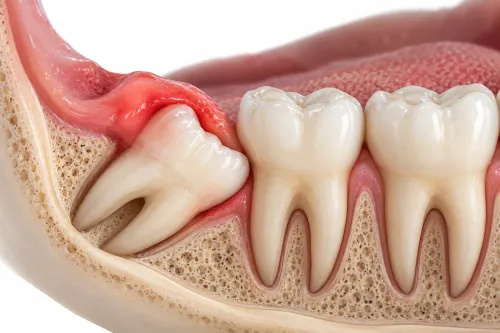
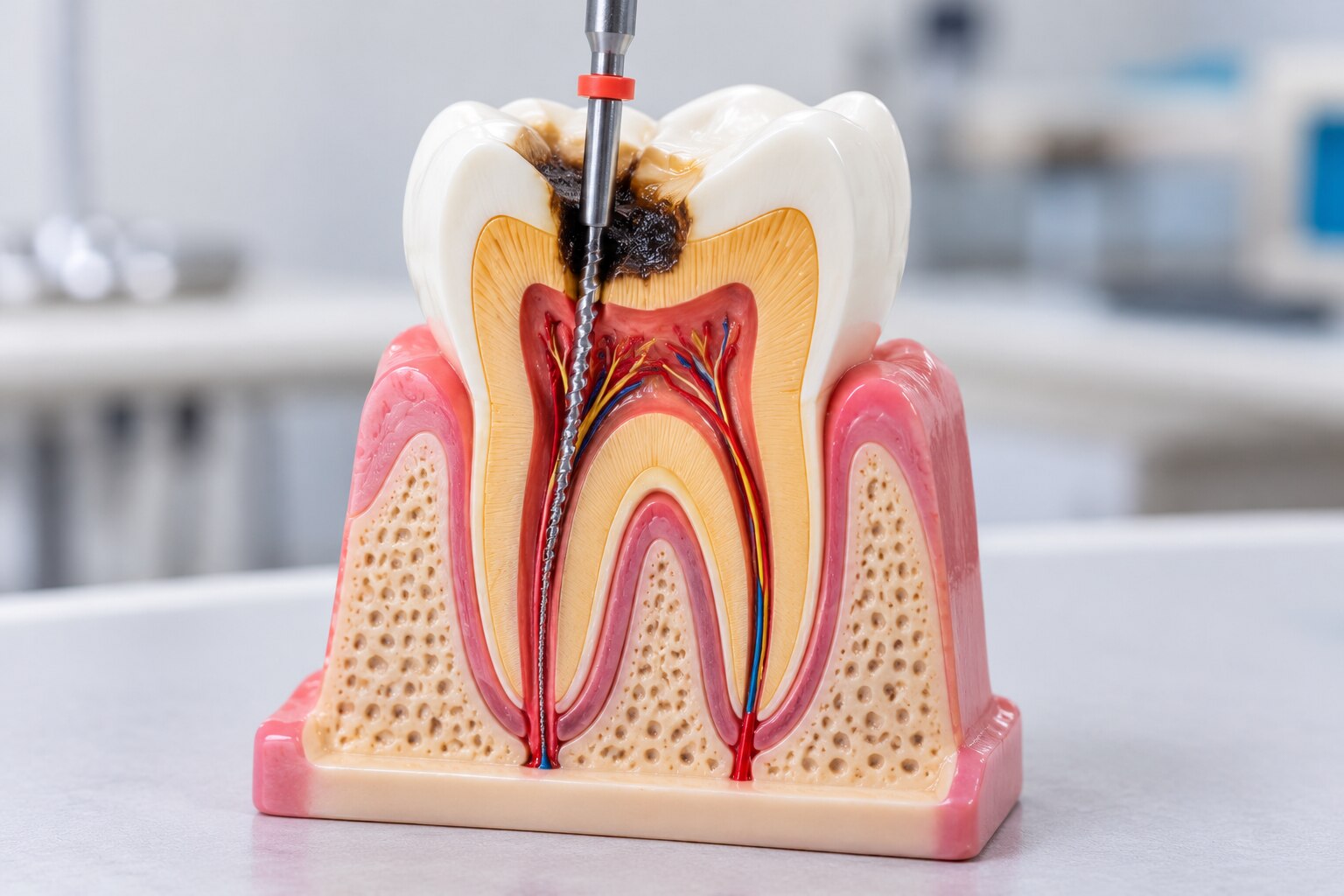
A severely infected tooth has inflammation or death of the pulp, the living tissue inside the tooth. A deep cavity can reach it; a cracked tooth can let bacteria enter; trauma can damage it even without visible decay. Infection may then move through the root and form an abscess near the root tip.
| Symptom | What it may indicate | What to do |
|---|---|---|
| Lingering hot or cold sensitivity; spontaneous throbbing | Pulp inflammation that is unlikely to settle on its own | Arrange a dental assessment |
| Pain on biting; cracked tooth symptoms | A crack, inflamed tissues around the root, or both | Seek examination rather than observing it |
| Gum swelling, facial swelling, or a draining pimple on the gum | Infection around the root with a pressure-release pathway | Book prompt dental care |
| Darkening after trauma | Injury or death of the pulp | Have the tooth tested |
| Fever or difficulty opening the mouth | Infection extending beyond the tooth and jaw | Seek urgent assessment |
Pain is an unreliable measure. A dead pulp can stop producing normal tooth pain while bacteria continue infecting the tissues around the root, especially when an abscess drains through the gum. Do not wait for symptoms to return.
Facial swelling, swelling near the eye or neck, fever, difficulty swallowing, difficulty breathing, or inability to open your mouth normally requires urgent care. A dentist must assess the tooth, test its pulp and surrounding tissues, and take imaging before deciding whether root canal treatment can help save the damaged tooth.
How does a dentist confirm whether root canal treatment is needed?
Symptoms alone cannot establish that root canal treatment is needed, and one X-ray cannot settle the diagnosis. The dentist combines your dental history with a visual examination, cold or electric pulp vitality test, percussion, palpation, bite testing and periodontal probing. This separates pulpal disease from a crack, gum disease, referred pain or a non-dental cause.
| Condition | Typical finding | What it means |
|---|---|---|
| Reversible pulp irritation | Brief cold pain that stops quickly after the stimulus is removed | The pulp inflammation may improve after removing decay, adjusting a filling or treating another cause |
| Irreversible pulpitis | Lingering heat or cold pain, spontaneous throbbing or night pain | The pulp is unlikely to recover and root canal treatment may be needed |
| Pulp necrosis | No response to cold or electric testing, sometimes with darkening after trauma | The pulp is dead; infection can develop around the root |
| Dental abscess | Tenderness to biting, swelling, a gum pimple or pus near the root | Infection has spread beyond the pulp and needs definitive dental treatment |
Dental X-rays are often enough to show deep decay, widening around the root or bone loss. A dentist may request three-dimensional imaging, such as cone-beam computed tomography, when a crack, curved root, missed canal or complex anatomy is suspected.
A normal-looking X-ray does not exclude early pulp disease, and a dark area alone does not prove that root canal treatment is the only cause or solution.
When can an infected tooth still be saved?
A large abscess or infection at the root tip does not automatically require extraction. You may still save a severely infected tooth when enough sound structure remains to support a filling, onlay or crown, the root has no vertical root fracture, and periodontal support from the gum and bone is adequate.
Extraction becomes more predictable when any of these problems prevents a durable, cleanable restoration:
- Decay or a fracture extends below the gum line, where the margin cannot be sealed or kept clean.
- Too few sound walls remain, or there is not enough ferrule—the band of healthy tooth structure above the crown margin—to resist splitting.
- Advanced periodontal disease has destroyed bone support, causing severe mobility.
- The crown-to-root relationship leaves too little supported tooth above too much exposed or weakened root.
- The tooth cannot be restored or maintained hygienically after treatment.
A longitudinal root crack is a vertical root fracture, and root canal treatment cannot join or seal that split. Extraction is common for a single-rooted tooth; in selected multirooted teeth, a dentist may remove only the fractured root and retain the rest if its structure and support remain sound.
In Pune, an examination at Dr. Panjiars Dental Clinic can assess restorability directly—remaining walls, ferrule, probing depths, mobility, fracture signs and periodontal support—rather than judging the decision from infection on an X-ray alone. A restorable tooth needs a planned final restoration, not merely cleaned canals.
Related service
Advanced anesthesia for zero discomfort Single-sitting treatment options available Preserves natural tooth structure Quick recovery with long-lasting... View service → |
What happens during treatment, and why does the final restoration matter?
Local anaesthetic makes the root canal procedure comfortable, while a rubber dam keeps saliva away and prevents instruments or disinfectant from entering your mouth. The dentist then creates an access opening through the crown to reach the diseased or dead pulp.
- The pulp and infected tissue are removed from the pulp chamber and root canals.
- Small files perform canal cleaning and shaping, creating a controlled path for disinfection and filling.
- Irrigation flushes debris and microbes from spaces that instruments cannot touch.
- The canals are filled and sealed to block further bacterial entry.
- The access opening is restored with a filling or other suitable restoration.
Antibiotics alone cannot remove infection trapped inside a necrotic pulp. They also do not drain a localized abscess; drainage, root canal treatment, or extraction addresses the source. Antibiotics are mainly an addition when infection is spreading or causing fever, malaise, cellulitis, or significant swelling.
Treatment may finish in one visit, but drainage, severe swelling, complex or calcified canals, retreatment, or medication between appointments can make staged care safer and more predictable. Multiple visits do not mean the treatment has failed.
A weakened back tooth needs protection quickly after the canals are sealed. Lost structure and existing cracks increase the chance of cusp fracture, so an onlay or dental crown after root canal treatment often provides cuspal coverage; leaving only a temporary filling for too long raises the risk of breakage and leakage.
What signs require urgent care before or after treatment?
Treat facial swelling from a tooth infection as a dental infection emergency, not a problem to watch until a routine appointment. Urgent assessment is needed because infection can spread beyond the tooth and jaw.
1. Seek urgent care for swelling of the face, around the eye or in the neck; fever; feeling generally unwell; difficulty swallowing; difficulty breathing; or inability to open your mouth normally.
2. Do not rely on antibiotics alone. They do not remove infection inside a dead pulp or drain a localised abscess. A dentist may need to provide drainage, root canal treatment or extraction; antibiotics are mainly an addition when infection is spreading or causing systemic signs such as fever, malaise, cellulitis or significant swelling.
3. During root canal aftercare, several days of tenderness when biting can occur, especially when inflammation was present around the root. Contact the treating dentist promptly if swelling worsens, pain is severe or persists, your bite feels high, or a temporary filling or crown comes out.
Persistent disease does not automatically mean extraction. Missed canals, incomplete cleaning or sealing, leakage, new decay, a fracture or infection outside the canal can be responsible. Depending on the findings, root canal retreatment or endodontic surgery may preserve the tooth.
Frequently asked questions
What makes a tooth severely infected or damaged?
Deep decay, cracks or trauma can injure or kill the pulp inside the tooth. Bacteria can then travel through the root and cause an abscess near the root tip.
How does a dentist confirm whether root canal treatment is needed?
The dentist examines the tooth, tests its response to cold or electrical stimulation, checks for tenderness and reviews dental X-rays. These findings show whether the pulp is inflamed or dead and whether infection has reached the surrounding bone.
When can an infected tooth still be saved?
A tooth can often be saved when enough sound structure remains for a secure restoration and the roots and supporting bone can be cleaned, sealed and restored. A dentist must assess cracks, gum support and the tooth’s restorability.
What happens during treatment, and why does the final restoration matter?
The dentist removes infected pulp, cleans and shapes the root canals, fills and seals them, then restores the tooth. A crown or another suitable restoration helps protect the weakened tooth from fracture and restores function.
What signs require urgent care before or after treatment?
Seek urgent care for facial swelling, fever, rapidly worsening pain, difficulty opening your mouth, trouble swallowing or breathing, or swelling around the eye. After treatment, contact your dentist if pain or swelling worsens instead of improving.